Insight
The Role of HR in an AI-Driven Organization
Published on April 25, 2026
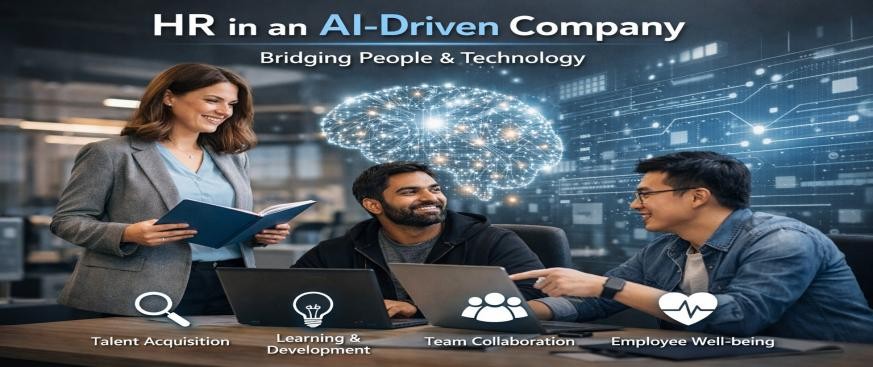
Working in HR at an AI-driven organization is one of those roles that keeps you on your toes in the best possible way. It is exciting, it is fast-moving, and it comes with its own unique set of challenges that you rarely find in more traditional work environments. As Artificial Intelligence continues to reshape how companies operate, innovate, and solve problems, HR finds itself right at the center of it all — responsible for building the teams that make that innovation actually happen.
What makes hiring in an AI company particularly interesting is that technical skills, while absolutely important, are never the whole story. Yes, expertise in machine learning, data science, and software development matters enormously. But the people who truly thrive in these environments tend to bring something more than that to the table. They are genuinely curious. They are comfortable with change. They have an appetite for learning that does not switch off when the workday ends. In an industry that evolves as quickly as AI does, those qualities are not just nice to have — they are what separate someone who grows with the organization from someone who struggles to keep up. HR's job is to find those people, and that in itself is both an art and a science.
Beyond hiring, one of the most important roles HR plays in an AI company is building a culture where people genuinely collaborate and grow. AI projects are rarely done in isolation—they involve developers, researchers, analysts, and business teams working together from different perspectives. Bringing all these viewpoints together smoothly doesn’t happen on its own. HR helps create an environment where communication feels open, knowledge is shared freely, and teamwork becomes a real strength.
Employee development is just as important. In a fast-changing field like AI, learning never really stops. That’s why organizations need to actively support their people’s growth. Whether it’s through training programs, workshops, or opportunities to explore new skills, HR ensures employees have clear paths to keep improving. When people feel supported, they become more confident, more innovative, and more engaged in their work.
At the same time, HR focuses on something technology cannot replace—the human side of the workplace. Even in a highly advanced AI environment, employee well-being, work-life balance, and a positive culture remain essential. People do their best work when they feel valued and supported, and HR plays a key role in making sure the workplace stays healthy, balanced, and motivating.