Insight
Navigating the Future: AI-Powered Congestion and Incident Detection
Published on January 05, 2026
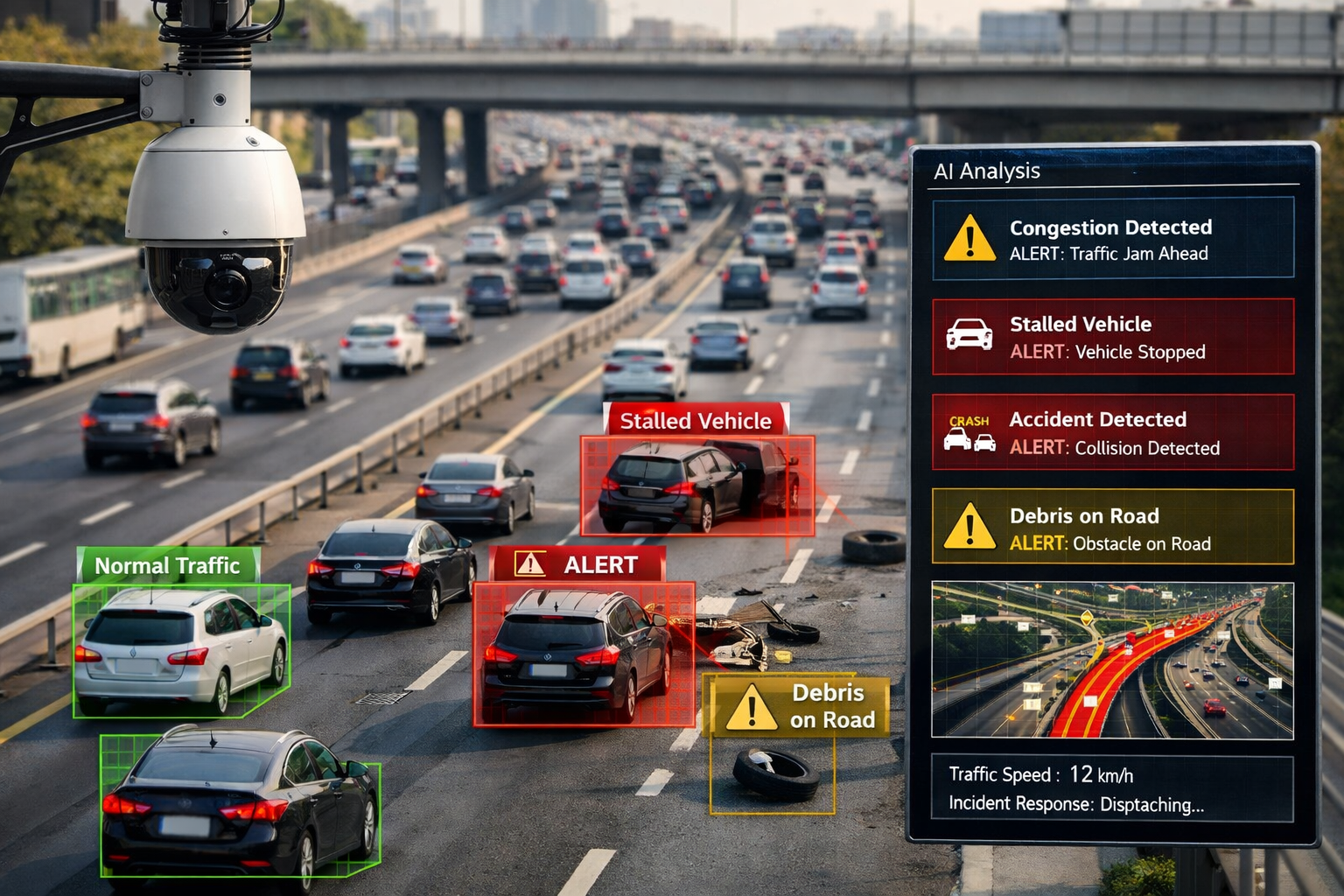
Traffic congestion and unexpected incidents are daily frustrations for commuters and a significant challenge for urban planners. From the creeping crawl of rush hour to the sudden halt caused by a stalled vehicle or debris, these disruptions impact our time, economy, and safety. But what if we could predict, detect, and respond to these issues in real-time, making our roads smarter and safer? Enter Artificial Intelligence. AI is revolutionizing how we understand and manage traffic. By leveraging advanced machine learning algorithms, we can move beyond traditional sensor-based systems to create truly intelligent transportation networks. Imagine cameras on highways, not just recording traffic, but actively analyzing it. AI models can process these visual feeds, learning to distinguish between normal traffic flow and developing congestion patterns. They can identify the subtle changes in vehicle speed and density that signal a bottleneck forming long before it becomes a standstill.
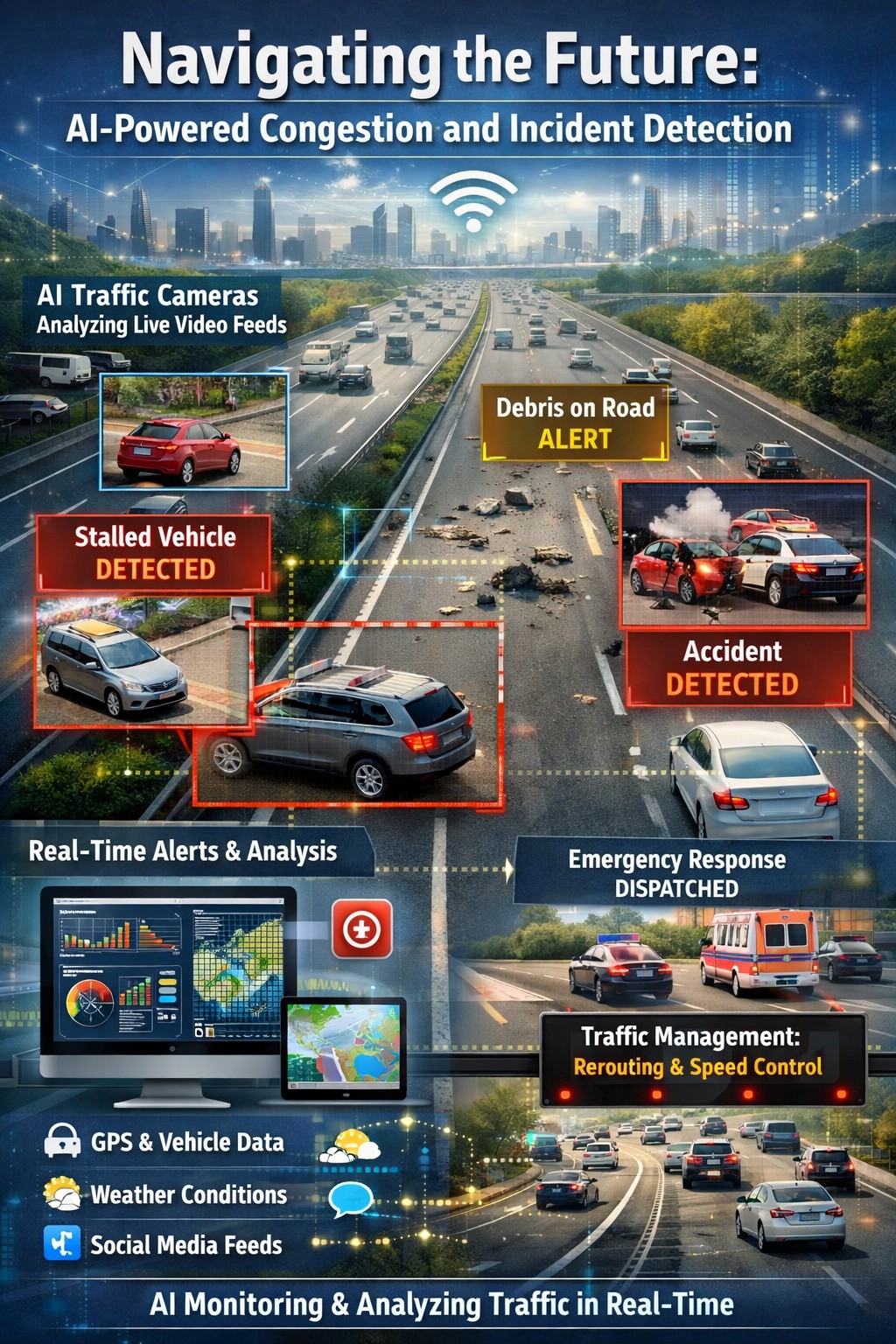
The power of AI extends far beyond just detecting slow traffic. These systems can be trained to instantly spot anomalies like a car stopped on the shoulder, debris in a lane, or even the immediate aftermath of a collision. Using computer vision, algorithms analyze video streams, identifying unusual objects or vehicle behaviors that indicate an incident. This rapid detection is crucial. The faster an incident is identified, the quicker emergency services can be dispatched, and traffic management strategies (like rerouting or variable speed limits) can be implemented, significantly reducing secondary accidents and overall disruption. Furthermore, AI can integrate data from various sources – GPS data from vehicles, social media reports, weather conditions, and even historical traffic patterns – to build a comprehensive, real-time picture of the road network.
👋 Hi! I'm Hanu AI

Hanu AI Beta v2.0
Your AI assistant