Industry 4.0 / Automation
AI & Automation: Revolutionizing Industrial Safety
Published on March 28, 2026
Industrial sites — whether factories, construction zones, or mining areas — have long been considered high-risk environments. Despite standard safety regulations, human oversight and delayed reporting often result in avoidable accidents. The need for real-time, intelligent monitoring is no longer optional — it’s essential.
Enter AI-powered automation.
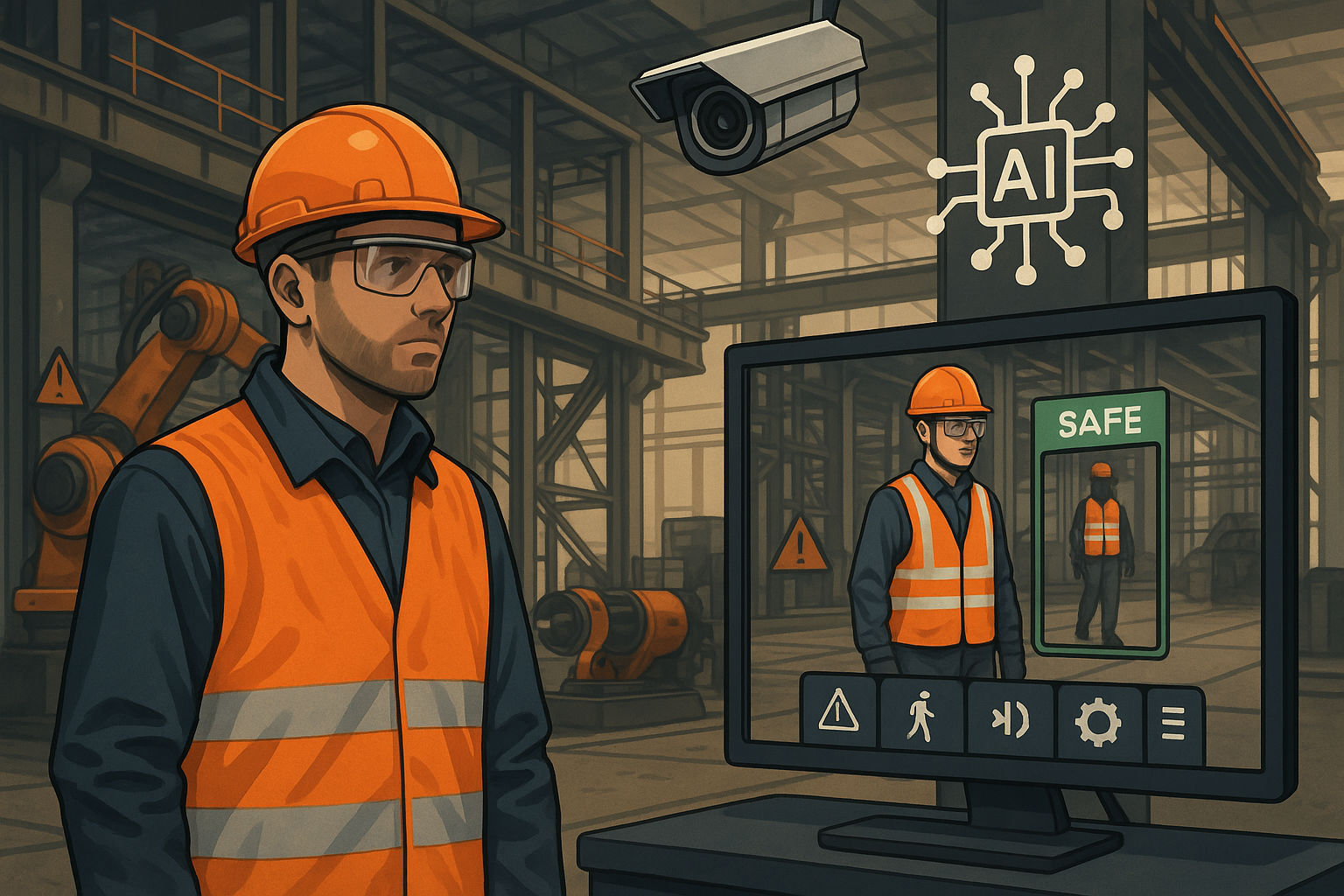
With computer vision, IoT sensors, and machine learning models, industries are now moving beyond static safety checks. AI systems can detect whether workers are wearing proper PPE (helmets, gloves, vests), track movement near hazardous zones, and even identify smoke, spills, or abnormal machine vibrations before they become threats.
Take, for example, automated visual monitoring. Using surveillance feeds, AI models can flag unsafe behaviors — like someone entering a restricted area or working near active machinery without protective gear — and trigger instant alerts to supervisors.
Meanwhile, predictive maintenance powered by anomaly detection algorithms helps reduce machine failure incidents. Instead of waiting for a malfunction, AI predicts when parts are likely to wear out, enabling preventive action.
And then there's incident analytics — where post-event data is analyzed to improve safety rules, retrain staff, and redesign workflows.
At the heart of this transformation is the principle of proactive safety. By combining real-time data with intelligent interpretation, AI not only reduces risk but also builds a culture of safety that adapts and evolves.
In the age of Industry 4.0, safety is no longer a checklist. It’s a smart system — always watching, always learning, and always one step ahead.